
After my O’Keefe & Merritt stove was delivered into my kitchen, I was hesitant to hook it up. I didn’t know anything about gas or gas stoves. There was a capped gas line, but I had no idea how to deal with that, either. So I called the local gas supplier. I was told I needed to hire a plumber to do the hookup, then a company gas tech would inspect the situation. They had the go/no go.
I decided to do a deep cleaning while the stove remained unconnected to gas. This really helped me get more familiar with my stove, inside and out.
When I felt ready, I asked my plumber, who was experienced in gas as well as water plumbing, to hook up the stove. He installed a shutoff valve for the stove, checked all burners to see the lit. That was that.
Fortunately, my kitchen could be closed off from the rest of the house. When I felt ready, I opened the shutoff valve llike my plumber showed me, lit the four pilot burners, closed the windows, left the kitchen, closed the kitchen doors, waited for about 20 minutes. When I reentered the kitchen, the smell of gas was pretty strong to me. With nothing burning except the pilots, I figured there were some gas leaks to address.

So I decided to purchase a leak detector. It was designed to detect various combustible gases, including natural gas and propane. I got a UEi Test Instruments CD100A Combustible Gas Leak Detector to help pinpoint gas leaks.
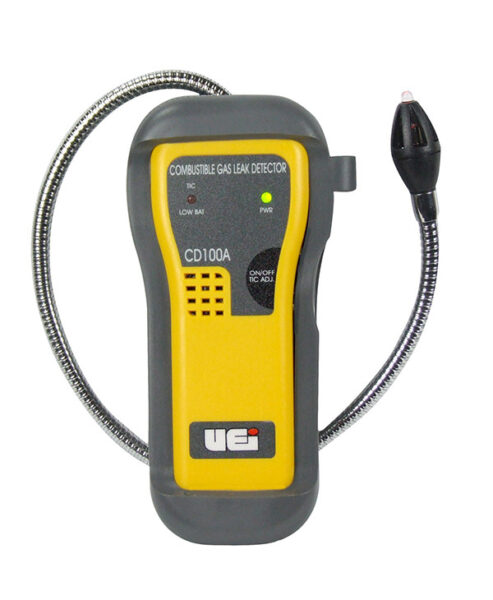
It’s really cool. It claims to detect gases from the following:
Acetone, Alcohol, Ammonia, Benzene, Butane, Ethylene Oxide, Gasoline, Halon, Hydrogen Sulfide, Industrial Solvents, Jet Fuel, Lacquer, Thinners, Methane, Naphtha Natural Gas, Propane, Toluene.
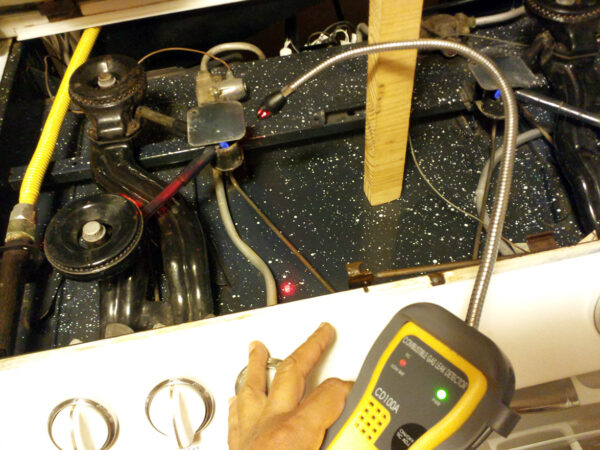
I first tested it by opening the fuel cap on my car. It clicked like crazy! So I put it to work on my stove. It’s not a precise instrument; no where near as sophisticated as what PG&E technicians had. It provided relative comparisons of gas levels through the frequency of clicks; none to low meant low levels of combustible gases. As the sniffer at the end of the hose got closer to a leak, the click frequency increased. I liked this model because the hose could be bent and shaped to fit into small spaces.


The detector confirmed there was a high concentration coming from the stove’s chimney. Under the stove top the oven and broiler valve leaked a bit without being turned on. It detected gas just above the oven and broiler pilot lights, leaks from the oven control.

So many leaks, large and small. I wondered how the previous owner didn’t detect smells from all the leaks. But I was jazzed I had a tool to help me locate them. One by one, I’d learn how to deal with them.
For the next three months while learning and adjusting gas-related things, I used the detector constantly. It did a lot to help me learn about where gas could potentially leak, raised my confidence and lowered my fears of the dangers of working with gas.
I had dealt with all but one little persistent leak. My detector alerted me to the area around one double valve. I wasn’t sure how to deal with it nor if it was truly problematic. I had the PG&E tech check it on their next visit. He confirmed it was there; spent about 20 minutes, spritzing with that bubble solution, but couldn’t see any bubbles. He decided it wasn’t a big deal; nothing for me to worry about.
Fine. He’d be gone while I was stuck with the leak! SO I dug in, determined to find that leak. The leak was at the point where one of the double valves threaded the manifold. The leak was shadowed, behind the valve stem. If there had been bubbles, they couldn’t have been seen. Fortunately, the detector found it. Some pipe dope applied to the threads fixed it.
After a short time it became very apparent that a gas detector is a VITAL device to have in a home if there are gas appliances. They work far far better than any nose. When it comes to finding out if gas going where it shouldn’t and avoiding explosions, they’re great.
And when DIYing a gas stove restoration, gas detectors are essential to the job done. Many gas stove owners don’t want to or are afraid to get familiar enough with their stoves. So if you take on a previously owned vintage gas stove chances are pretty good it hasn’t been maintained well enough and should be checked carefully. Gaskets, valves, seals, vents,
Sadly, the unit’s power and setting dial broke only after three months – not a good outcome for such a pricey item. But the manufacturer stood by their warranty. They repaired the unit at no cost to me. It’s back home, working again. But I don’t use it as much, since I’ve addressed the major problems. It feels very comforting, however, to have one in the house.
General approach to finding gas leaks
Whether you smell something, just finished making a gas connection, or are just curious about the safe performance of your gas stove here’s what I consider the best approach to locating a gas leak in any situation, as a DIYer.
Have these two testing methods available:
- A handheld combustible gas leak detector, like the aforementioned UEi model.
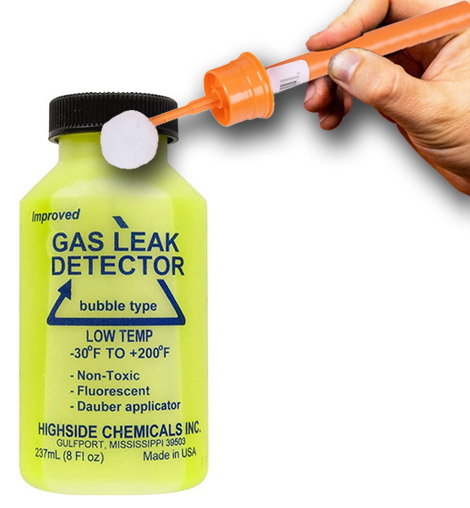
- An anti-corrosive leak bubble detector.
The handheld detector can test the air in the general vicinity and let you know as you get closer to the leak source. It can also help you pinpoint the leak, if it’s equipped with a little sniffer on the end of a goose-neck hose. I found this feature invaluable.
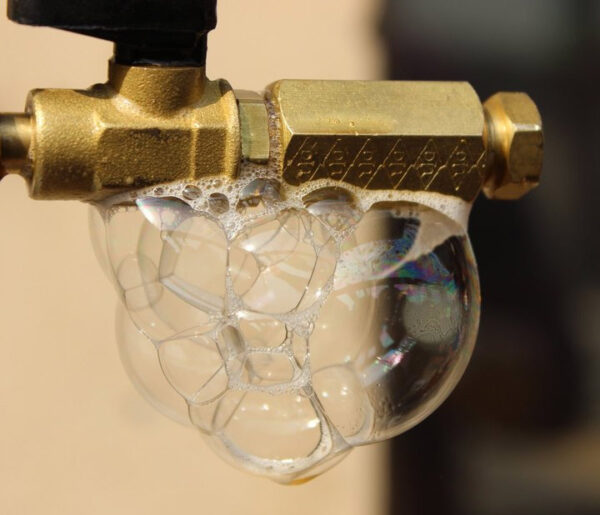
If you already have an idea of where you think the leak is, you can apply the soapy solution and look for bubbles. Inspect for several minutes. Although, sometimes, the bubbles are not visible due to size, obstructions or lack of light. That’s when the handheld detector with a sniffer is very useful. Between the two methods, location is inevitable!
Sealing leaks
Gas appliances, including stoves, involve many parts and supplies; fittings, pipe, compression, flared, threaded fittings, couplers, hoses, valves. So there are many types of joins, like water plumbing. And regardless of the types of joins, they must be leak proof; more leak proof than for water systems. So it’s very important to be able to determine if there are leaks.
Equally important is knowing how to fix them. These are some of the tools/terms of the gas plumbing trade.
- yellow gas tape
- pipe dope
- anaerobic resin compounds
- compression fitting
- flared fitting
You need to understand when to apply those various methods if you want to attempt to address gas leaks. Best case, have a professional to the job. It’s really not something you want to take a casual approach doing.
This page is primarily about how I used a handheld combustible gas leak detector. Another way to detect unwanted gases is to wall mounted detectors. Try seeking the advice of a firefighter to make sure you get a trustworthy and accurate detector.
